.svg)
Invoice Reconciliation at Scale Requires More Than Checking Bills
In most organizations, invoice reconciliation sits quietly at the end of the logistics process.
After shipments move. After services are delivered. After costs are already incurred.
It is treated as a back-office task — procedural, administrative, and largely reactive.
And yet, this is where some of the largest supply chain losses quietly occur.
Hidden surcharges slip through. Contracted rates are misapplied. Accessorials go unverified. Small discrepancies compound across thousands of invoices. By the time finance teams detect the issue, the money has already left the building.
The cost is rarely dramatic in isolation.
It is devastating in aggregate.
For large enterprises, that silent leakage often adds up to millions every year.
The Problem Is Not Invoicing. It Is Assurance.
Most logistics leaders assume invoice errors are inevitable. Carriers bill differently. Rates change. Exceptions happen. The solution, historically, has been to hire more people, add more checks, and dispute after the fact.
But the real problem is not the invoice itself.
It is the lack of a trusted, system-level mechanism that verifies charges before payment, not weeks later.
When reconciliation depends on PDFs, emails, spreadsheets, and tribal knowledge, accuracy becomes probabilistic. Even strong teams struggle to keep up at scale. Errors are not caught because no one is negligent — they are caught because the system is fragmented.
What should be a control function becomes a cleanup exercise.
Manual Reconciliation Breaks Down Quietly — Then All at Once
On the surface, manual reconciliation appears to work. Invoices are reviewed. Payments go out. Disputes are raised when something looks obviously wrong.
But beneath that surface, failure accumulates:
Rates are checked against outdated contracts
Surcharges are reviewed selectively, not systematically
Multi-currency conversions rely on manual judgment
Volume discounts are missed or applied late
Approval cycles stretch while clarification emails bounce back and forth
By the time discrepancies surface, operational teams have moved on and finance teams are forced to recover costs retroactively — if recovery is even possible.
The result is predictable:
Overpayments distort freight spend
Cash flow becomes harder to forecast
Vendor relationships strain under repeated disputes
Trust erodes between finance, procurement, and logistics
The organization is not lacking effort.
It is lacking assurance.
Why Traditional Freight Audit Was Never Designed for Scale
Freight audit processes were built for a simpler world — fewer lanes, fewer vendors, fewer variables. They assume consistency in invoice formats and stability in pricing.
That world no longer exists.
Today’s logistics networks are multi-modal, multi-currency, and highly dynamic. Invoices arrive in dozens of formats. Rates vary by lane, volume, season, and contract vintage. Accessorials change faster than teams can document them.
Manual audit was not designed to reason across this complexity. It can sample. It cannot systematically validate.
What organizations call “audit” is often partial verification.
And partial verification is indistinguishable from blind trust.
AI-Native Reconciliation Changes the Question Entirely
AI-driven reconciliation does not attempt to make humans faster at checking invoices.
It removes the need for humans to check most invoices at all.
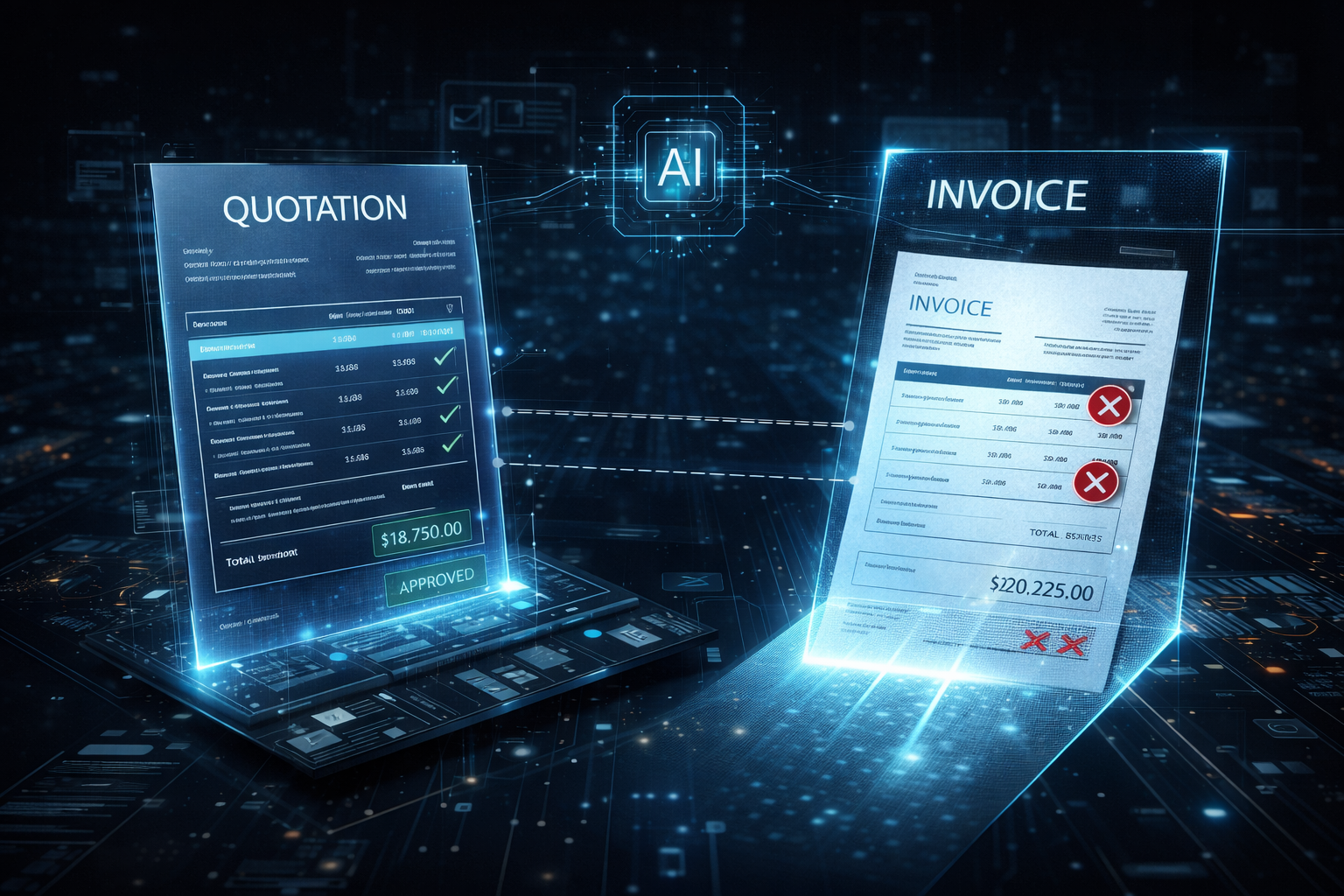
Instead of reviewing documents line by line, the system validates charges against a single source of truth — contracts, rate cards, shipment milestones, and historical behavior — in real time.
The shift is subtle but profound.
The question changes from:
“Does this invoice look right?”
to:
“Why does this invoice deviate from what we expected?”
Only exceptions surface. Only meaningful deviations demand attention. Everything else flows through automatically, with full traceability.
This is not cost recovery.
It is cost prevention.
Accuracy Only Matters If It Changes Behavior
High reconciliation accuracy is meaningless if it arrives too late.
The real value emerges when validation happens early enough to influence outcomes:
Payments are released with confidence
Disputes are raised with evidence, not opinion
Vendors receive clear, consistent feedback
Finance teams operate on verified data, not assumptions
Instead of negotiating after the fact, organizations establish credibility upfront. Over time, vendors adapt. Billing quality improves. Disputes decline.
Trust is rebuilt — not through conversation, but through consistency.
From Financial Control to Operational Trust
Automated reconciliation does more than protect margins.
It aligns teams around a shared truth.
Procurement trusts that negotiated rates are enforced
Finance trusts that payments reflect reality
Logistics trusts that execution data is reflected accurately
Vendors trust that disputes are fair, fast, and data-backed
The system stops being adversarial. It becomes predictable.
And predictability is the foundation of strong supply chain relationships.
The Vectus Perspective
Vectus treats invoice reconciliation as a core control function — not a downstream finance task.
By embedding AI-native validation directly into execution workflows, Vectus ensures that invoices are reconciled against what actually happened, not what was manually interpreted weeks later.
Exceptions trigger ownership. Patterns reveal risk. Accuracy compounds over time.
The goal is not just fewer disputes.
It is fewer surprises.
Conclusion: Assurance Is the New Advantage
In volatile logistics environments, cost control does not come from harder negotiation or stricter policing. It comes from systems that verify reality automatically and consistently.
Invoice reconciliation, when done right, becomes invisible — because errors never make it through.
That is not efficiency.
That is resilience.
And in global supply chains, resilience is the advantage that compounds.
